Advocacy Guide Series

Explore each guide to understand evidence, timelines, and strategies parents use to support autistic students in inclusive classrooms.
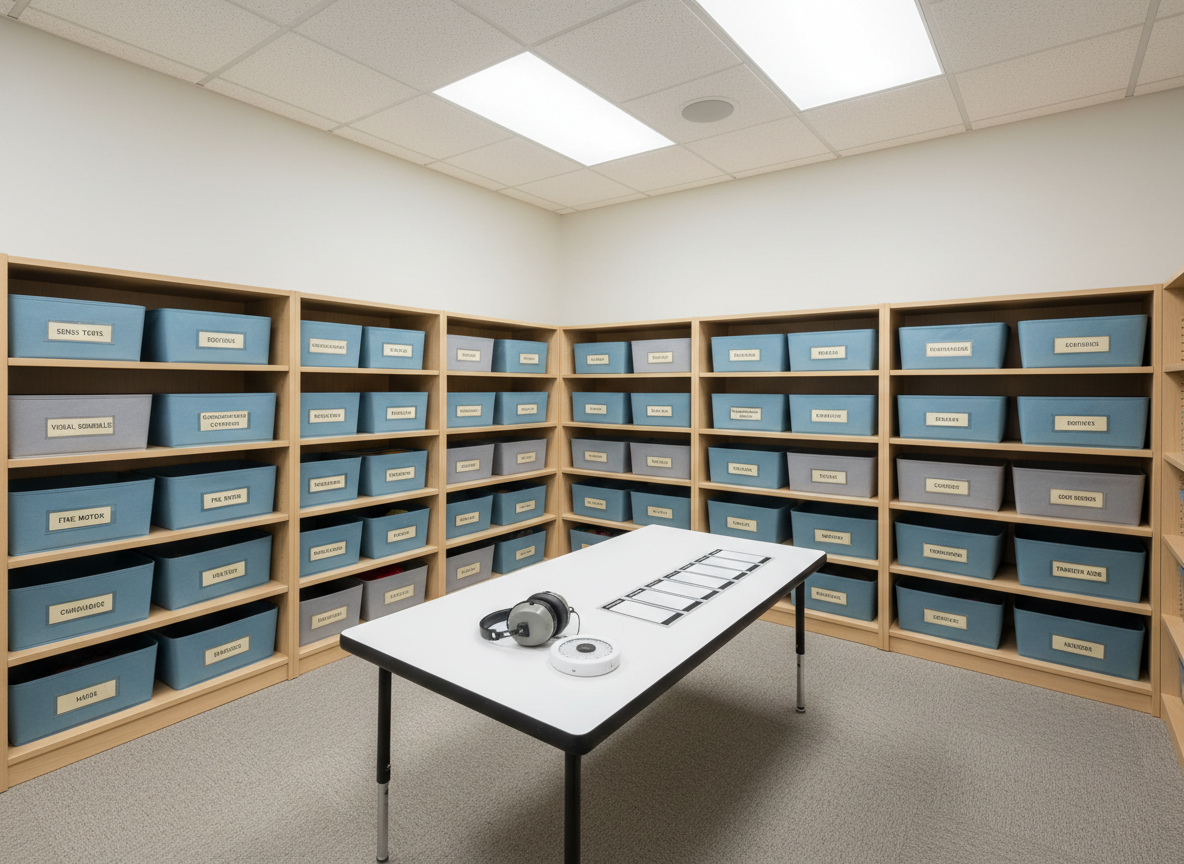
An empty, well-organized resource room in a school features open shelving with neatly labeled bins in muted blues and grays, each tagged with terms like “Sensory Tools,” “Visual Schedules,” and “Communication Supports.” In the center, a rectangular white table holds a laminated visual schedule strip, a set of noise-cancelling headphones, and a simple, neutral-colored timer. Overhead fluorescent lights provide consistent, soft illumination, minimizing harsh shadows and emphasizing clarity. The photograph is taken at eye level with a slightly wide angle to capture the full layout, maintaining sharp focus and a structured, corporate aesthetic. The mood is calm, orderly, and supportive, highlighting practical resources used to advocate for effective accommodations for students with autism.
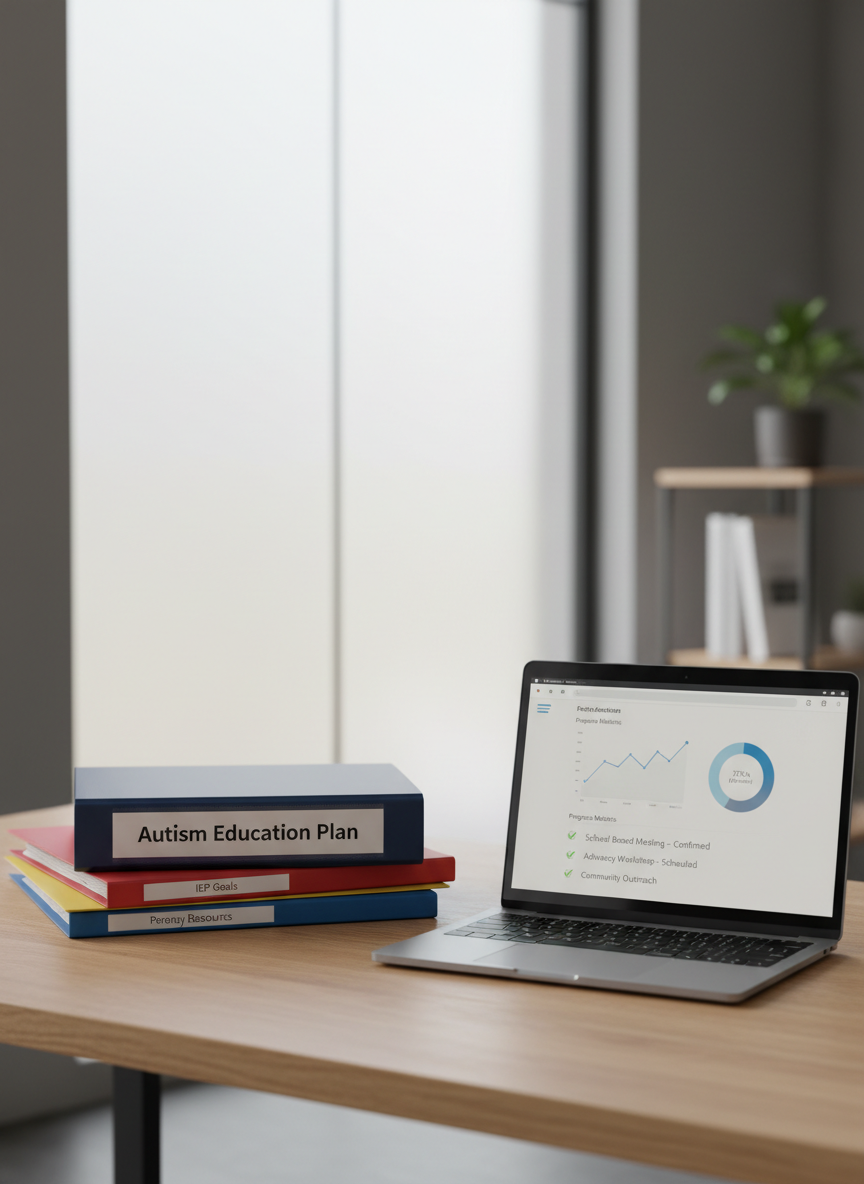
A neatly arranged stack of educational advocacy materials sits on a light oak desk: a navy-blue binder labeled “Autism Education Plan,” color-coded folders, and a slim silver laptop displaying a clean, corporate-style dashboard with graphs and checklists. The desk is positioned in front of a large frosted-glass window that lets in soft, diffused daylight, creating gentle, neutral-toned reflections on the laptop’s metallic surface. A muted gray wall and a minimal bookshelf in the softly blurred background add structure without distraction. Photographic realism, eye-level composition, and a shallow depth of field keep the focus on the organized tools, conveying a calm, professional, and empowering atmosphere suited to a non-profit advocacy website.

Advocacy Guides Series

This structured guide series helps families navigate school meetings, IEPs, and accommodations with practical steps and trusted resources.

Deep Dive Guides

We publish each guide as an accessible article, searchable by topic and easy to browse for caregivers and educators.

Advocacy Feedback Survey

Help us tailor future topics by sharing which advocacy issues you find most challenging and what resources would be most helpful.

Your input drives new guides, templates, and tools to support stronger collaboration with schools and better outcomes for students with autism.

← Back

Thank you for your response. ✨

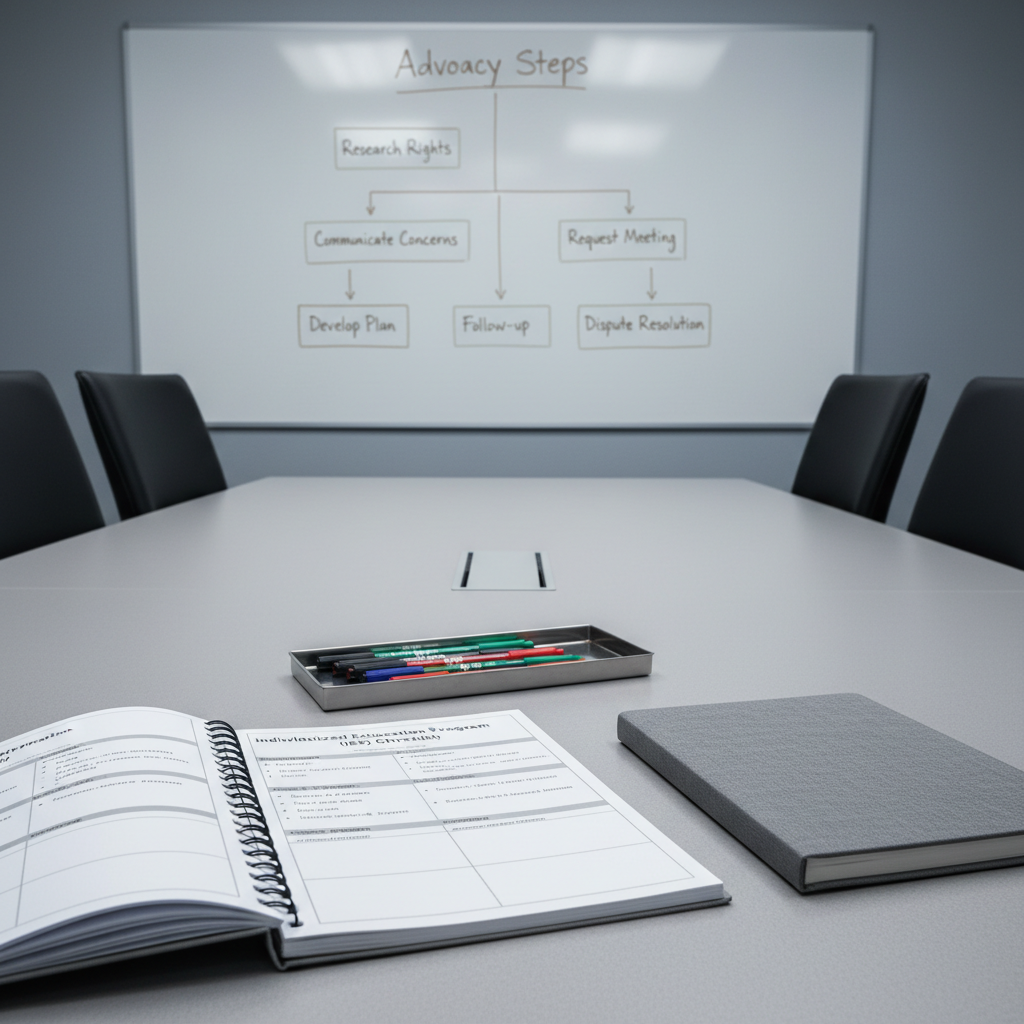
A tidy conference table made of smooth, light gray laminate holds an open spiral-bound “Individualized Education Program (IEP) Checklist” with clearly printed sections, a matching gray notebook, and a set of fine-point pens arranged on a minimalist metal tray. A large whiteboard in the background displays a structured flowchart titled “Advocacy Steps” with clean lines and neutral-toned markers. Overhead, cool, even office lighting casts soft shadows and emphasizes the orderly layout. The photographic image is shot from a slightly elevated angle using the rule of thirds, with sharp focus across the scene. The mood is organized, corporate, and reassuring, reflecting a systematic approach to supporting students with autism in educational settings.